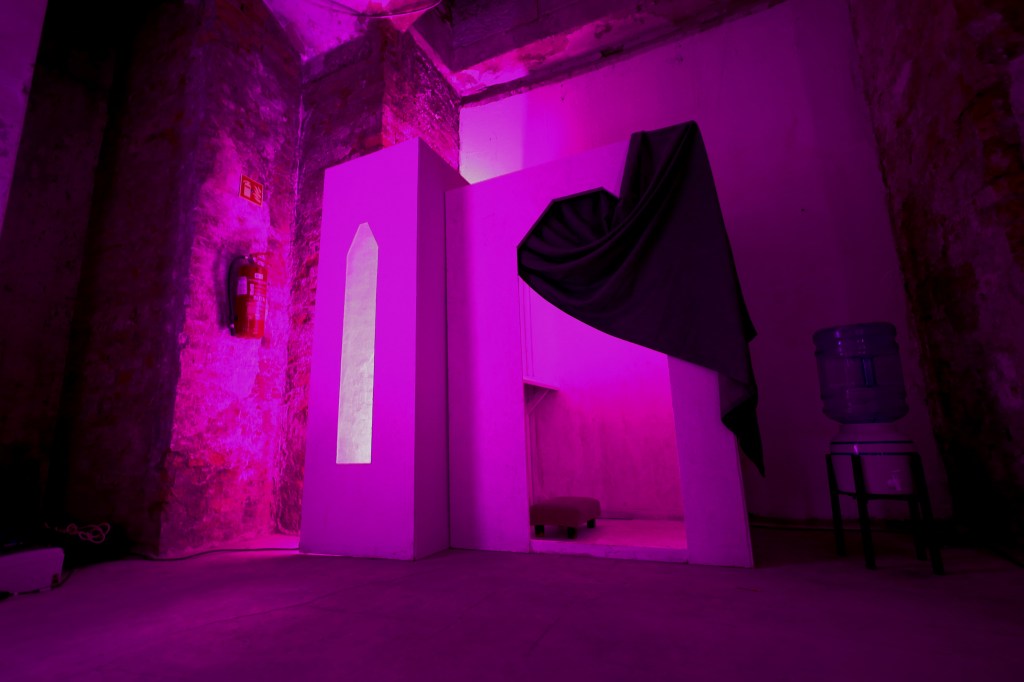
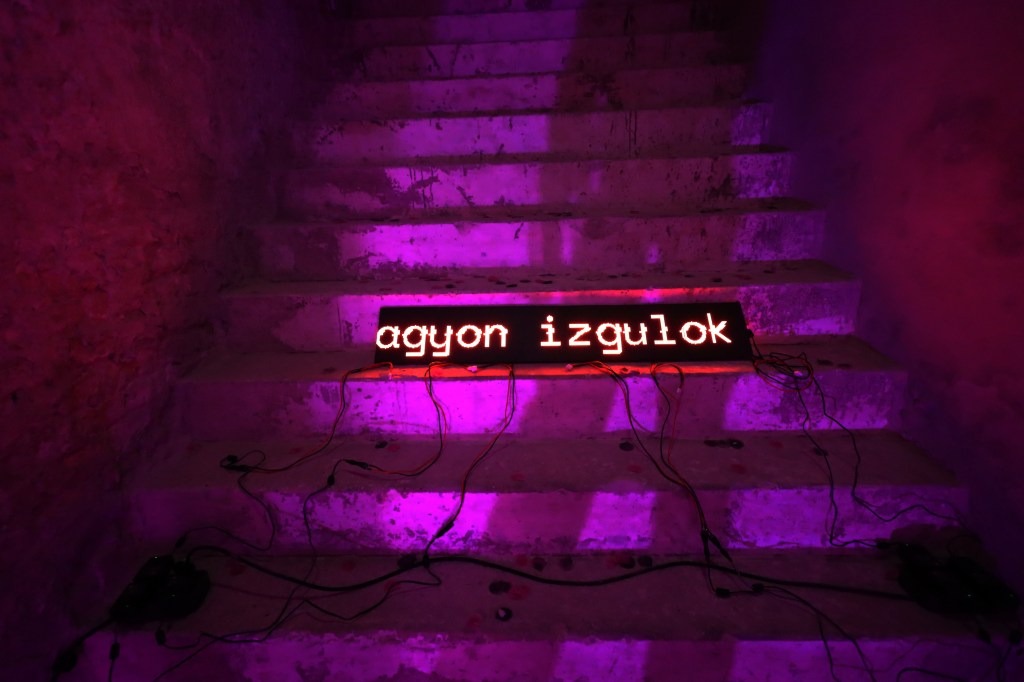
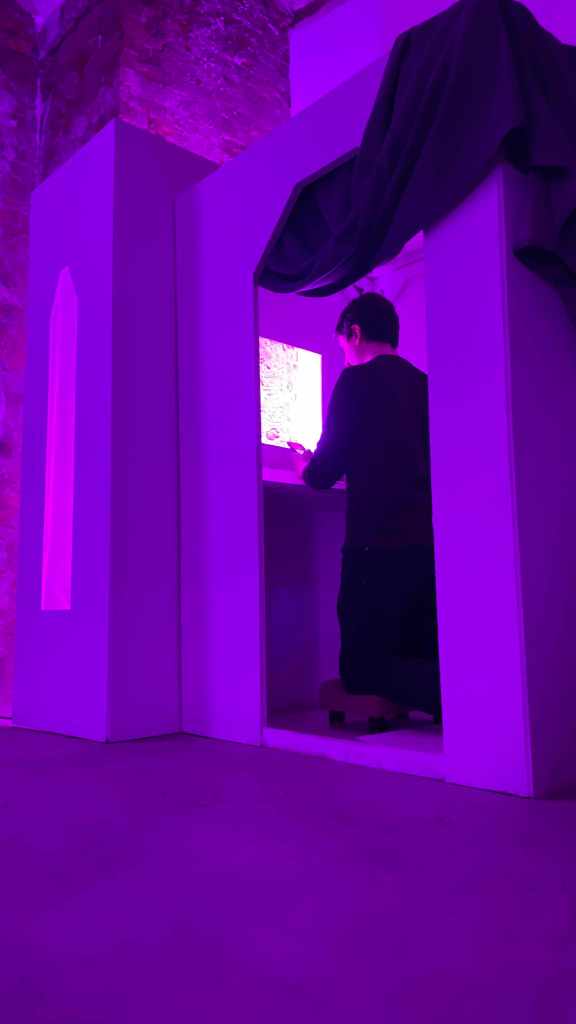
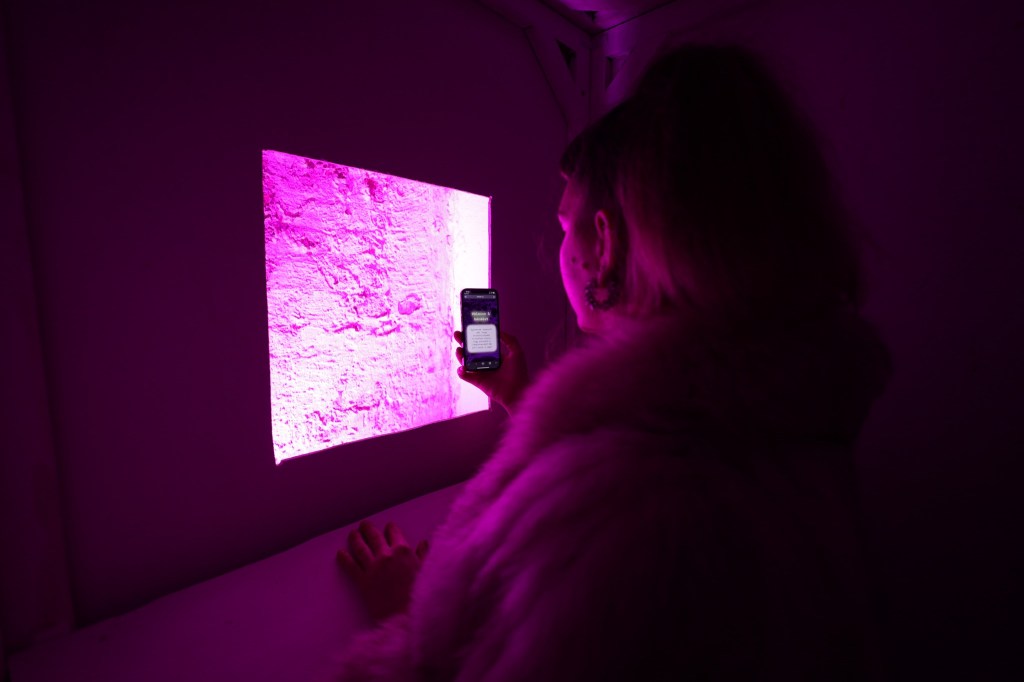
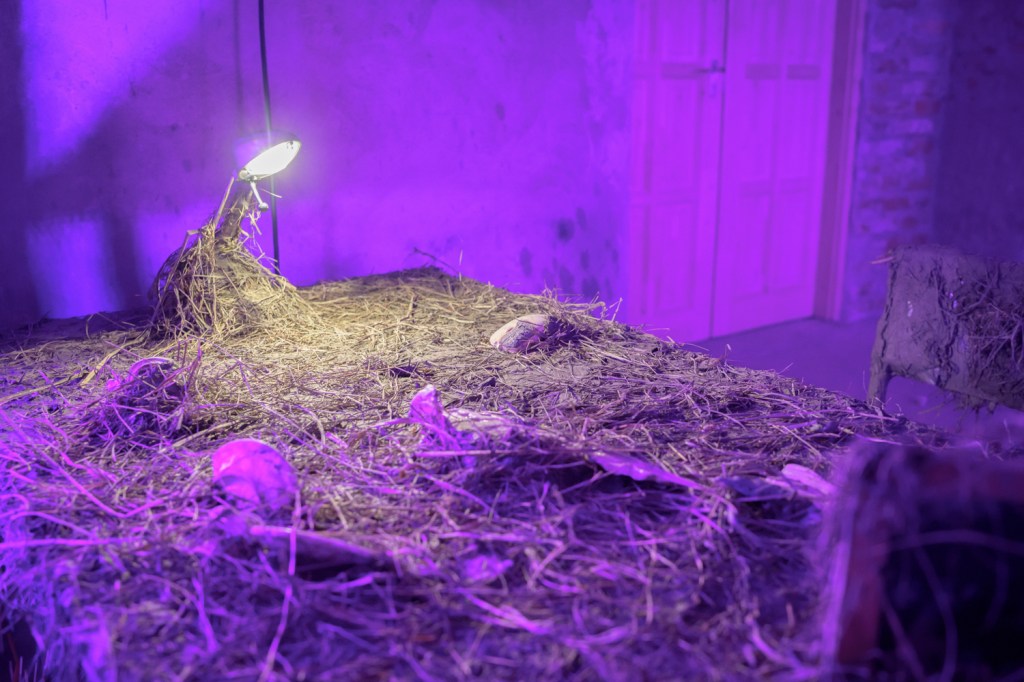
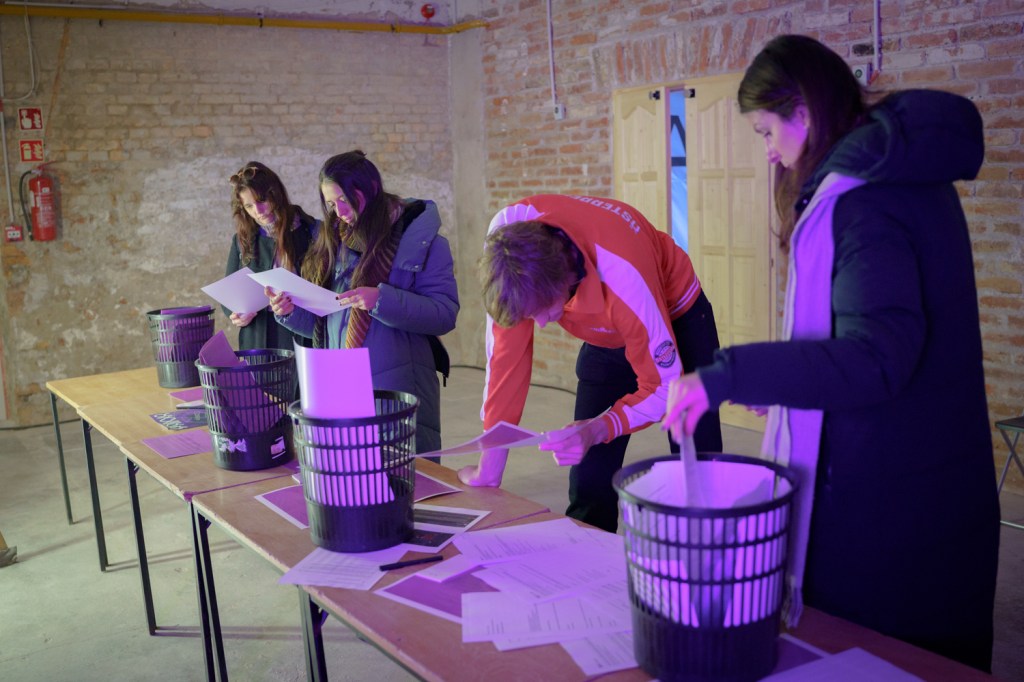
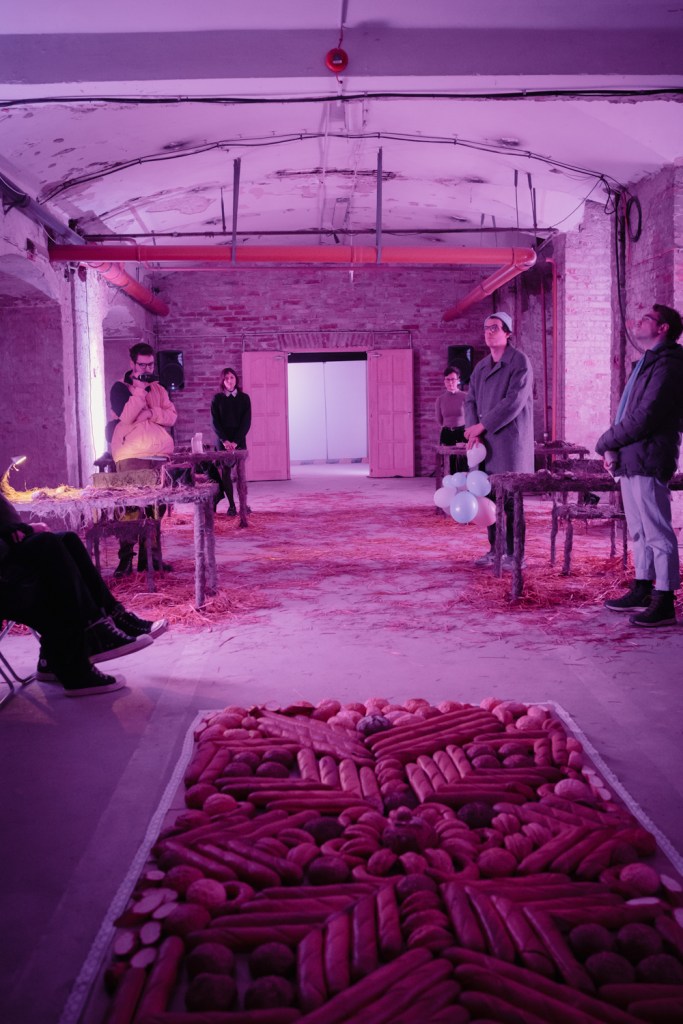
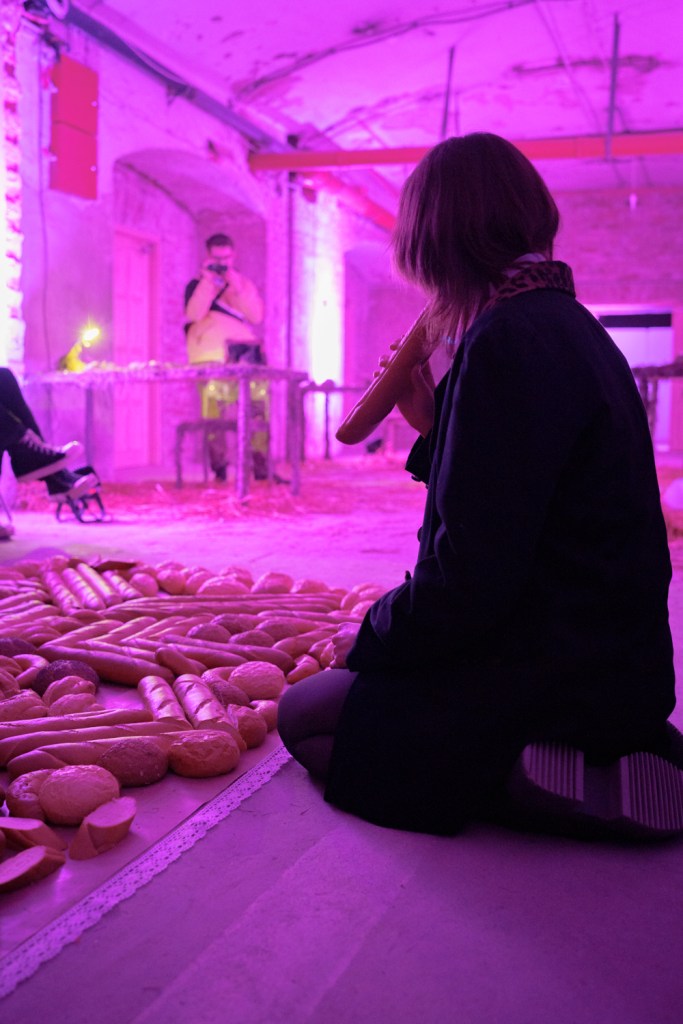
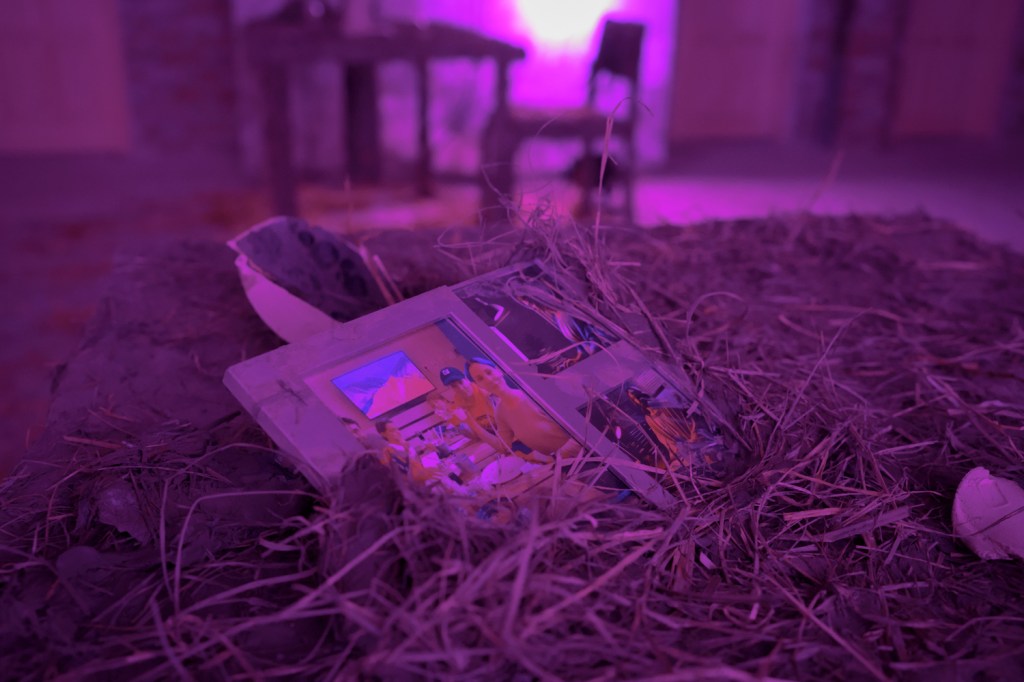
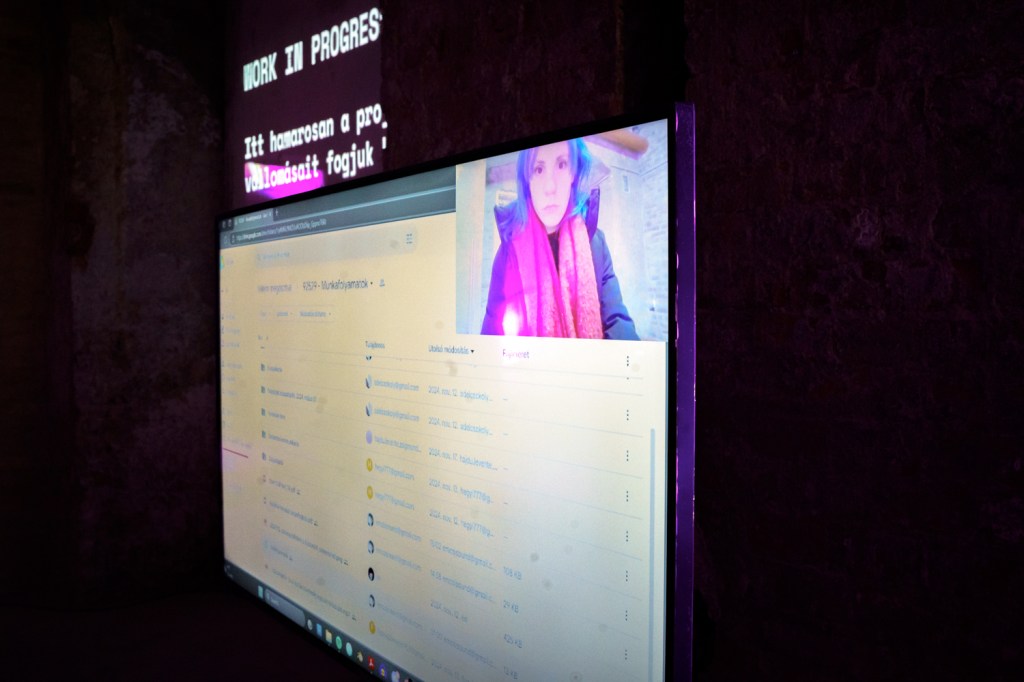
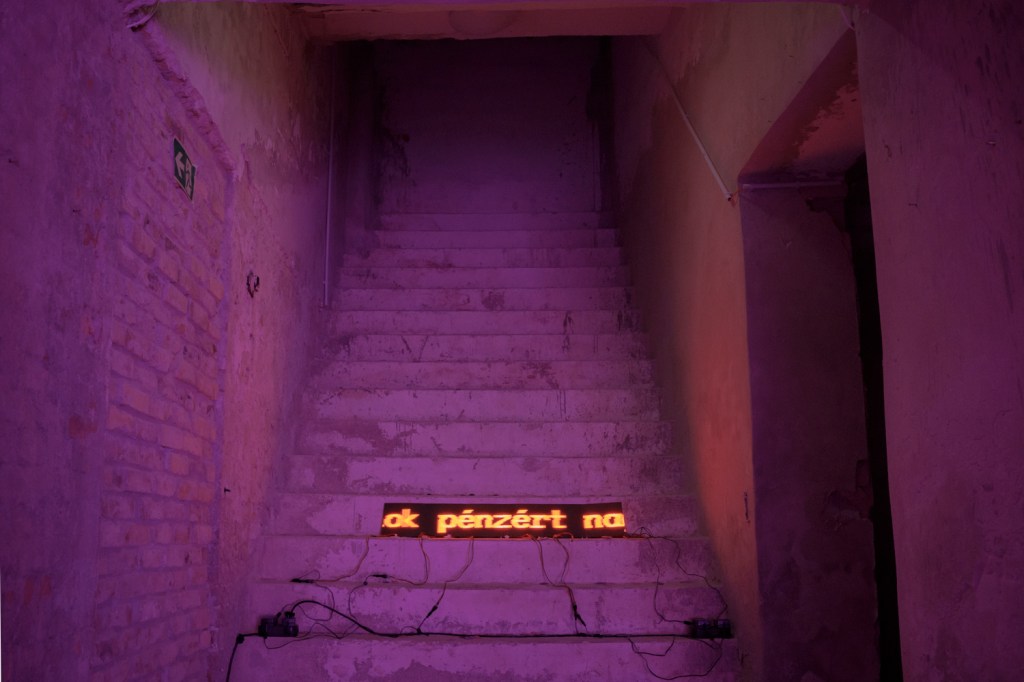
Et Labora is a confession booth operated by a mobile application that prompts users to reflect on their work ethics and makes their confessions into data as well as specatcles.
Are you into curatorial bullshit?
YES
The installation situates itself at the intersection of speculative futurology, cybernetic governance, and the algorithmic modulation of subjectivity, reconfiguring the architectural typology of the confessional booth as a techno-semiotic interface for the emergent epistemologies of labor quantification. By supplanting the priestly figure with a mobile application—an omnipresent adjudicator of moral-economic value—the work foregrounds the machinic transmutation of self-disclosure into data capital, wherein linguistic performativity becomes raw material for predictive analytics and behavioral modeling.
Engaging with contemporary discourses in neurocapitalism and computational psychoanalysis, the installation interrogates the ontological instability of work as a techno-social construct, tracing its recursive entanglement with gamified self-surveillance, biometric optimization, and the emergent biopolitics of algorithmic affect regulation. By leveraging the critical methodologies of speculative design and posthuman epistemology, the work problematizes the Cartesian separation between authenticity and automation, exposing the feedback loops through which subjective interiority is rendered an extractive economic site within late-stage cybernetic capitalism.
Drawing on the epistemic frameworks of Bullshit Jobs by David Graeber and The Protestant Ethic and the Spirit of Capitalism by Max Weber, the installation destabilizes the foundational mythologies of labor as a teleological necessity, positioning work not as an existential imperative but as a historically contingent, computationally mediated apparatus of control, where the boundaries between cognition, value production, and machinic extraction collapse into a singularity of neoliberal hyper-productivity.
NO
The installation examines the presumed future distortion of our relationship to work through a reimagined confessional booth—one that, unlike the traditional confessional, is no longer a site of spiritual absolution but rather a tool of algorithmic surveillance. In this booth, the priest has been replaced by a mobile application, which, as the omnipresent moral arbiter, questions us about our relationship to work, then converts our confessed “sins” into data commodities, making them available for collective consumption.
This sharp contrast reveals the hypercapitalist logic that ties the legitimacy of human existence to individual productivity while commodifying its most intimate aspects, dissolving them into the currency of social control. Drawing on the sharp critiques of Bullshit Jobs by David Graeber and The Protestant Ethic and the Spirit of Capitalism by Max Weber, the installation challenges the dissolution of boundaries between work and life, authenticity and artificiality.
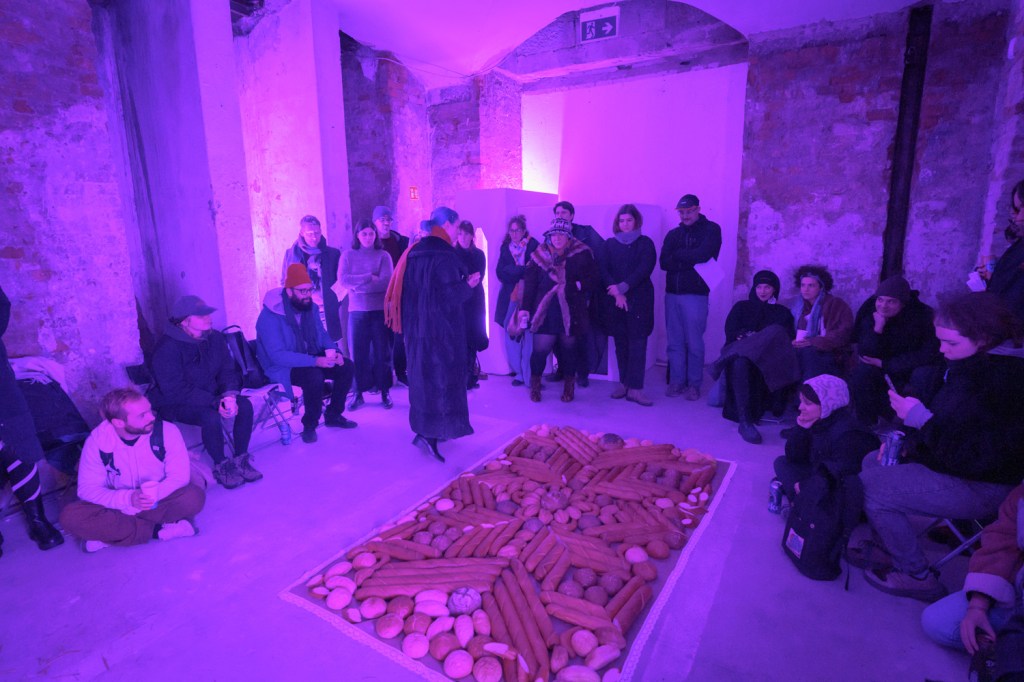
The installation was first exhibited as the closing event of the 92529 project—a year-long initiative focused on redefining the notions of work. The project consisted of countless meetings, yet no consensus was ever reached. Over the course of the year, we constantly found ourselves engaged in various bullshit jobs, leading to exhaustion and burnout. Throughout its duration, the project incorporated team buildings, collaborative zones, and focus groups, all designed to foster dialogue and collective reflection—yet ultimately reinforcing the cyclical paradox of productivity without resolution.
The exhibition took place from November 21–25, 2024. At its finissage, we invited the head of the Labour Cabinet of the far-right party, along with a journalist from the government media, to discuss young people’s future regarding employment in Hungary.
Workers of the Year:
Bíborka Béres, Sanna Bo, Adél Csököly, Emcsi, Tamás Hegyi, Levente Hajdú, Márton Hunyadi, Lea Kalfus, Kristóf Kófiás, Dénes Tornyi, Ármin Tillmann, Csaba Velegi.
The project was implemented with the organisation support of KultDesk Cultural Foundation and co-financed by the European Union.